Bridge Junior School
Information and Help for Parents
Abacus Information For Parents
Helping Your Child With Maths
Mathemagician Andrew Jeffrey is on hand to help you with fun ideas for practising maths at home. Watch a group of children try lots of fun activities with Andrew, including games to practise times tables. The following link leads to six videos and really good advice. The videos are about: enjoying maths at home, times tables games, games with dice, games with playing cards, an ancient strategy game called NIM and seeing number relationships.
http://www.oxfordowl.co.uk/for-home/maths-owl/expert-help--2/fun-maths-at-home
What methods are used for teaching how to add, subtract, multiply and divide?
Mental calculation strategies for addition
Written methods for addition
Mental calculation strategies for subtraction
Written methods for subtraction
Mental calculation strategies for multiplication
Written methods for multiplication
Mental calculation strategies for division
Written methods for division
Key Facts to Learn
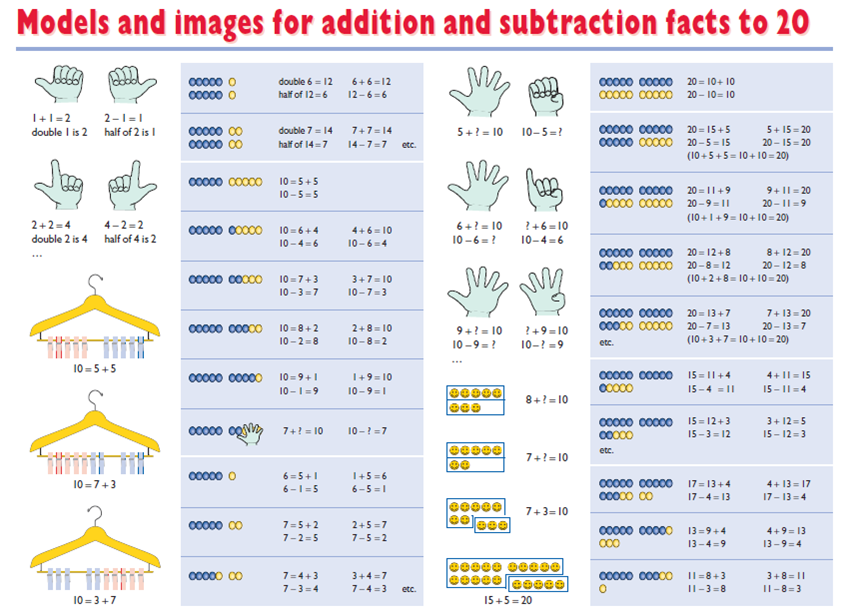
Addition and subtraction facts should be learnt by most children by the end of Year 2.
Multiplication and division facts should be known to most children by the end of Year 4.
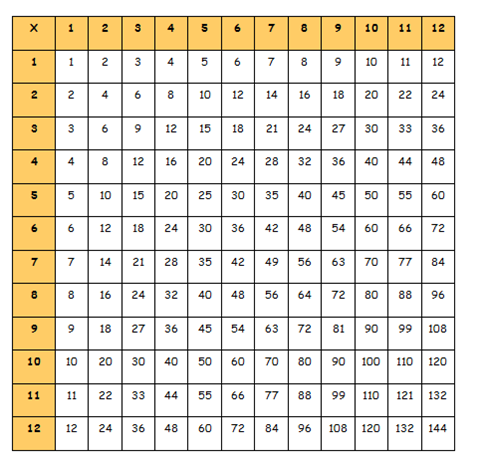
If your child knows their 1, 2, 5 and 10 times tables they will have learnt 34 facts!
There are only another 21 more to learn until you know all of them up to 10 x 10. Here they are:
3 x 3 = 9 3 x 4 = 12 3 x 6 = 18 3 x 7 = 21 3 x 8 = 24 3 x 9 = 27
4 x 4 = 16 4 x 6 = 24 4 x 7 = 28 4 x 8 = 32 4 x 9 = 36
6 x 6 = 36 6 x 7 = 42 6 x 8 = 48 6 x 9 = 54
7 x 7 = 49 7 x 8 = 56 7 x 9 = 63
8 x 8 = 64 8 x 9 = 72
9 x 9 = 81
Then just the 11 and 12 times tables to learn!
Times Tables Poster (print off on A3)
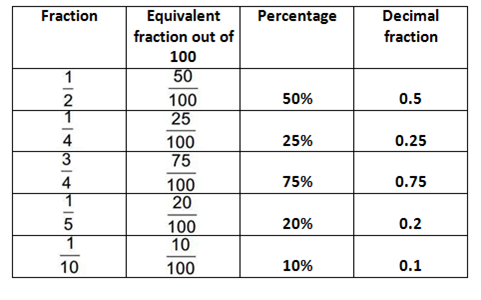
Children in Year 5 and 6 need to know that a fraction is part of a whole and the equivalent decimal values and percentages.